Welcome to the World of Python
Learning Python Language is easy when you know the basics
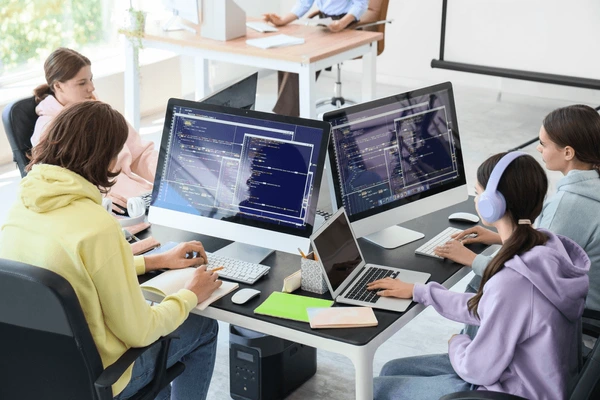
Welcome to the World of Python
Learning Python Language is easy when you know the basics , Mar-17-2026
Welcome! If this is your first time writing code, you’ve picked a fantastic starting point. Python is designed to be readable, much like the English language, making it the perfect "first language" for aspiring developers and entrepreneurs.
In this chapter, we will break down the essential concepts and terms you need to know before you write your first line of code.
What is Python?
Python is a high-level programming language. Think of it as a bridge between how humans think and how computers work.
High-Level: This means the code is easy for humans to read and write. You don't have to worry about the complex "0s and 1s" the computer hardware uses.
Interpreted: Python code is executed line-by-line. If there is an error on line 5, the computer will run lines 1 through 4 and then stop to tell you what went wrong.
Core Concepts for Beginners
Before diving into code, let's understand how Python "thinks."
Variables: Imagine a variable as a labeled box. You can store information (like a name or a price) inside the box and give it a name so you can find it later.
Data Types: This defines what kind of information is in your box. Is it a number? A piece of text? A list?
Syntax: These are the "grammar rules" of Python. Just like a sentence needs a period, Python code needs specific symbols and spacing (indentation) to work correctly.
The Python Glossary
Here are the most common terms you will encounter as you start your journey:
| Term | Simple Definition |
| String (str) | Any text inside quotes, like "Hello World" or "Python is fun". |
| Integer (int) | A whole number without a decimal, like 10, 500, or -5. |
| Float | A number with a decimal point, like 99.9 or 3.14. |
| Boolean | A value that is either True or False. Used for making decisions. |
| Function | A reusable block of code that performs a specific task. Think of it as a "recipe." |
| Comment | Notes written for humans that the computer ignores. In Python, these start with a #. |
| Indentation | The blank space at the beginning of a line. In Python, this is used to group code together. |
| Library | A collection of pre-written code that you can use so you don't have to "reinvent the wheel." |
How Python Works: The Flow
When you write a program, you follow a simple cycle:
Input: You give the computer data (e.g., a student's name).
Process: The computer performs an action (e.g., checks if the name is in a list).
Output: The computer shows a result (e.g., "Welcome to the class!").
Key Terms & Glossary
To build a strong foundation, you should become familiar with these essential keywords:
High-Level Language: A programming language that is easy for humans to read and write, resembling English.
Interpreter: The software that reads and executes your Python code line-by-line.
Variable: A named "container" or "box" used to store data values for later use.
Data Types: The classification of data (e.g., String for text, Integer for whole numbers, Float for decimals, and Boolean for True/False).
Syntax: The specific set of rules (like grammar) that defines how a Python program must be written.
Indentation: The use of whitespace at the beginning of a line to define the structure and "blocks" of code.
Function: A reusable piece of code designed to perform a specific action (e.g.,
print()to show text on the screen).Debugging: The process of finding and fixing errors or "bugs" in your code.
Why Python?
Versatile: Used for web development, data analysis, and automation.
Large Community: If you get stuck, millions of people have likely faced the same problem and shared the solution online.
Career Ready: Learning Python is a direct path to "Learn and Earn" opportunities in the modern job market.

This introductory chapter serves as the gateway for first-time programmers. It focuses on demystifying what programming actually is and why Python is the ideal language for beginners. Students will move from understanding the high-level "human-friendly" nature of Python to recognizing the basic building blocks that make up every software program—such as storing information and following "grammar" rules.
Popular
- Python For Begineers
- Learn Python
- Gagan Khanna
- 9312352488
Shopeze.in
Boost via Reels & Images
Learn Python By Gagan Khanna
Professional Help for Growth
Tags
Python For Begineers Learn Python Gagan Khanna 9312352488